%20(3600%20x%20400%20px)%20(2).png)
.png)
.png)
How to Create a Custom Ritual + Spell

Designing a custom ritual allows practitioners to shape their spiritual work with intention, clarity, and personal meaning. A well-crafted ritual is simply a structured series of symbolic actions that align energy, focus the mind, and guide the desired outcome. While rituals can be as simple or elaborate as one chooses, the most effective ones follow a thoughtful process that blends purpose, materials, and action into a cohesive practice.
This guide is meant to help you create your own rituals and spells, but is by no means the supreme authority on how to do a ritual or cast a spell. There is no "right way" or "wrong way" to do these things. This guide is simply a representation of how Bayou Apothecary performs some rituals and spells, and is only a tool to help you open your mind and create your own way.
1. Define the Purpose
Every ritual begins with a clear intention. Identify the specific goal—such as protection, healing, manifestation, clarity, or release. The intention sets the tone for the entire process, influences the tools selected, and determines the ideal lunar phase or timing. Writing the purpose as a short, positive statement can help anchor the ritual’s energy.
2. Choose the Timing
Many practitioners align their rituals with lunar phases, planetary influences, days of the week, or seasonal correspondences.
-
New Moon: beginnings, goal setting
-
Waxing Moon: growth, momentum
-
Full Moon: manifestation, illumination
-
Waning Moon: release, cleansing
Timing is optional but adds symbolic power.
3. Select Correspondences
Correspondences are symbolic tools that reinforce the ritual’s intention. They may include:
Colors
Use candle or cloth colors that match the intent—green for prosperity, white for clarity, black for protection, pink for love, and so on.
Herbs
Choose herbs with aligned properties, such as lavender for peace, cinnamon for success, or rosemary for cleansing.
Crystals
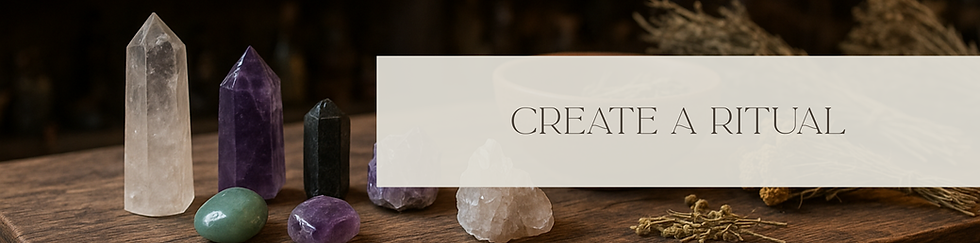
Incorporate stones that support the purpose—like amethyst for intuition, citrine for abundance, or obsidian for grounding.
Elements
Earth, Air, Fire, and Water can each be represented through stones, incense, candles, and water bowls.
The goal is not to collect every tool possible, but to select symbols that feel purposeful and aligned.
4. Prepare the Space
A ritual space does not need to be elaborate; it simply needs to feel sacred. Some practitioners cleanse the area using smoke, sound, or moon water. Others light candles, arrange tools on an altar, or play calming music. The intention is to create a calm, focused environment where energy can flow without distraction.
5. Craft the Ritual Steps
Design the flow of the ritual in a way that feels meaningful. Most custom rituals follow this pattern:
-
Grounding: Settle the mind through breathwork or silence.
-
Opening: Light a candle, cast a circle, or state the purpose aloud.
-
Energy Raising: Chanting, visualization, drumming, or movement to build energy.
-
Core Action: This is the symbolic act that represents the intention—writing a petition, anointing a candle, charging a crystal, knot-tying, burning a release note, etc.
-
Release: Direct the raised energy toward the intention through breath, visualization, or spoken words.
-
Closing: Thank any spiritual energies called upon, extinguish candles safely, and ground again.
These steps may be adapted, expanded, or simplified.
6. Seal the Work
After the main ritual action, many practitioners seal their intention with an affirmation, gesture, or closing phrase. Some carry a charm bag, wear a crystal, or store the petition paper somewhere meaningful to keep the energy active. Others prefer to let the ritual stand on its own without any physical reminders.
7. Reflect and Observe
Keeping a brief journal entry about the ritual can deepen the practice. Recording the intention, tools used, feelings, and results helps track growth and refine future rituals. Some outcomes appear quickly; others unfold gradually over time.
Final Words:
Creating a custom ritual is a deeply personal and empowering practice. By combining intention with symbolic tools and meaningful actions, practitioners craft a spiritual experience that aligns their energy with their desired outcome. Rituals do not have to be perfect to be powerful—what matters most is authenticity, focus, and the willingness to connect with one’s own inner wisdom.