%20(3600%20x%20400%20px)%20(2).png)
.png)
Scrying
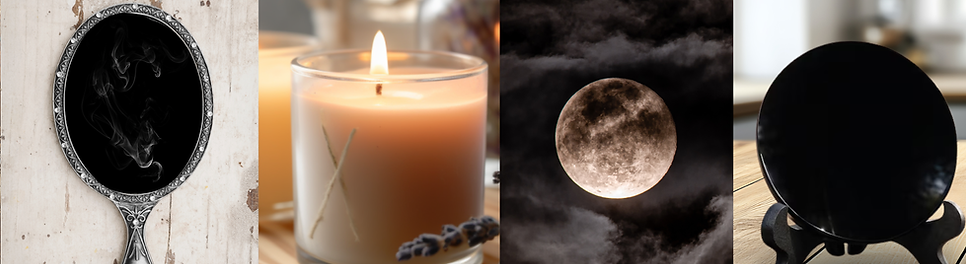
Scrying is a form of divination and spiritual observation that involves gazing into reflective or luminous surfaces in order to receive visions, symbolic impressions, intuitive insight, or spiritual guidance. The practice has existed in many cultures throughout history and is often associated with mysticism, prophecy, meditation, and ritual work. The surface used for scrying may include mirrors, crystal balls, water, flames, polished stone, obsidian mirrors, and moon reflections.
Practitioners typically enter a calm, meditative state while focusing softly on the chosen surface. Rather than staring intensely, scrying often involves relaxed observation that allows images, symbols, thoughts, or impressions to emerge naturally.
Some people believe scrying connects them with intuition, spirits, ancestral wisdom, or hidden knowledge. Others view it as a psychological process involving imagination, symbolism, subconscious thought, and altered states of awareness.
.png)
A Brief History of Scrying
Scrying is one of the oldest known forms of divination and spiritual observation, with roots stretching back thousands of years across many civilizations. The practice developed independently in different cultures, often involving reflective surfaces such as water, polished stone, mirrors, crystals, or fire. Ancient people believed these surfaces could reveal hidden knowledge, spiritual messages, visions, or insight into the future.
Some of the earliest forms of scrying involved gazing into still pools of water, a practice sometimes called hydromancy. In ancient Egypt and Mesopotamia, priests and mystics used reflective bowls, oils, and polished surfaces during spiritual rituals and ceremonies. Ancient Greek and Roman traditions included forms of mirror divination known as catoptromancy, in which mirrors or reflective water were believed to reveal symbolic visions or messages from the gods.
In Mesoamerican civilizations, especially among the Aztec and Maya peoples, polished obsidian mirrors held deep spiritual significance. Obsidian was associated with prophecy, protection, and communication with divine forces. The deity Tezcatlipoca, whose name means “Smoking Mirror,” was strongly connected with obsidian mirrors and mystical vision practices.
During the Middle Ages and Renaissance in Europe, scrying became closely associated with ceremonial magic, alchemy, astrology, and occult philosophy. One of the most famous historical practitioners was John Dee, a mathematician and advisor to Queen Elizabeth I who used crystal balls and polished mirrors in attempts to communicate with spiritual entities and angels. Scrying tools from this era included crystal spheres, dark mirrors, polished metals, and reflective stones.
In the 19th and 20th centuries, interest in mysticism, Spiritualism, and metaphysical traditions helped revive scrying practices. Black mirrors, crystal gazing, candle scrying, and lunar divination became popular within occult societies and modern spiritual movements. Today, scrying continues to be practiced worldwide as both a spiritual discipline and a meditative, symbolic, or intuitive exercise.
.png)
Mirror Scrying
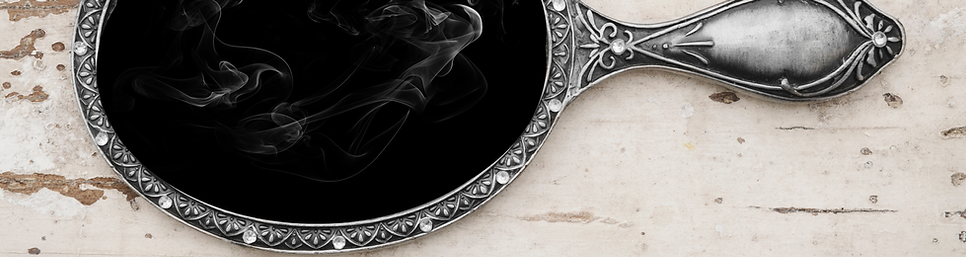
Mirror scrying involves gazing into a reflective surface—often a darkened or black mirror—in a dimly lit environment. The goal is to quiet the conscious mind and allow symbolic images, visions, emotions, or intuitive impressions to emerge.
Black mirrors are especially common because the dark surface reduces distraction and encourages deep focus. Traditional scrying mirrors may be made from:
-
painted glass
-
polished obsidian
-
dark acrylic
-
blackened metal
How Mirror Scrying Is Practiced
A practitioner typically:
-
Sits quietly in low light.
-
Places the mirror at eye level.
-
Uses candlelight or moonlight for illumination.
-
Observes any impressions, images, or sensations.
Some practitioners report seeing symbols, faces, landscapes, colors, shifting shadows, and emotional impressions. Others experience mirror scrying as a meditative or introspective practice rather than literal visions.
Scrying with Candles
Candle scrying, sometimes called pyromancy or flame gazing, uses the movement and appearance of flames for divination and meditation. Fire has long been associated with transformation, illumination, spirit, and communication in spiritual traditions around the world.
Practitioners may interpret unusual flame behavior as symbolic messages or energetic responses while observing the candle. They may witness:
-
flame movement
-
flickering patterns
-
smoke direction
-
brightness
-
color variations
-
wax formations
-
Many practitioners:
-
meditate while focusing on a flame
-
ask questions before beginning
-
interpret emotional reactions and visual impressions
-
use colored candles connected to symbolic meanings
For example, white candles may symbolize purification, blue candles may represent truth and intuition, and red candles may symbolize passion, courage, or energy. Flame gazing is also used as a mindfulness exercise because prolonged focus on a candle can encourage relaxation and altered states of awareness.
Lunar Reflection and Divination
Moon scrying involves using moonlight or the reflection of the moon in water, mirrors, or polished surfaces as a focal point for meditation and divination. The moon has historically been associated with intuition, mystery, dreams, cycles, and spiritual transformation.
Many spiritual traditions connect lunar phases with different energies:
-
new moon — beginnings and intention setting
-
waxing moon — growth and attraction
-
full moon — heightened intuition and revelation
-
waning moon — release and reflection
During moon scrying, practitioners may gaze at moon reflections in water, meditate beneath moonlight, observe emotional impressions, and seek symbolic visions or intuitive guidance. Some people believe the full moon enhances psychic sensitivity and spiritual awareness, making it especially significant for divination rituals.
Obsidian Plate Scrying
Obsidian is a naturally occurring volcanic glass known for its deep black reflective surface. Throughout history, obsidian has been associated with protection, shadow work, truth, and spiritual insight. Polished obsidian mirrors and plates have been used for ritual and divination practices in several cultures, particularly within Mesoamerican traditions.
In obsidian scrying, practitioners gaze into the reflective black surface while entering a meditative state. Because the surface is dark and highly reflective, many believe it helps deepen concentration and encourage visionary experiences.
Obsidian scrying is often connected with:
-
shadow work
-
subconscious exploration
-
spiritual protection
-
ancestral connection
-
prophetic symbolism
Some practitioners report seeing symbolic imagery emerge gradually from the darkness, while others experience emotional or intuitive impressions rather than visual visions.
Scrying and Future Insight
Some practitioners use scrying to explore possible future events or hidden influences surrounding a situation. Visions or impressions received during scrying sessions are often interpreted symbolically rather than literally. Readers may seek guidance concerning relationships, personal growth, spiritual development, or major life decisions. Many traditions teach that scrying reveals possibilities and energetic tendencies rather than fixed destiny, emphasizing that human choices and actions continue to shape future outcomes.
Tips for Beginners
People interested in scrying often begin with simple and quiet practices.
Helpful beginner suggestions include:
-
practicing in dim lighting
-
reducing distractions
-
entering a calm emotional state
-
keeping expectations relaxed
-
recording impressions afterward in a journal
Beginners are often encouraged to focus more on subtle feelings, symbolic impressions, and intuitive thoughts rather than expecting dramatic visions immediately.